
Your Atlanta borrower is pre-qualified and excited. Then you send “the list” — W-2s, two months of bank statements, recent pay stubs, the gift-letter, the driver’s license — over email. Three days later half of it is missing, one PDF is a blurry photo of a phone screen, and the bank statement is page 2 of 5. You text a reminder. You call. You re-send the list. The file that should be in processing is still sitting in your inbox, and the buyer is starting to wonder if the lender down the street would be easier.
A borrower document portal fixes this by giving every borrower one secure, branded place to upload documents against a live checklist — with automatic requests, reminders, and routing into your loan origination system — so a file becomes complete in hours instead of the days most brokers lose to email tag. This guide walks through exactly how to set one up for an Atlanta mortgage business, step by step, and where a done-for-you custom software build makes sense versus rolling your own.
The short answer: what a borrower document portal is
A borrower document portal is a secure, branded web space where each borrower logs in to see exactly which documents you need, upload them from a phone or laptop, and track what’s still outstanding — while the system requests, reminds, validates, and files everything for you. Instead of documents scattered across email, text threads, and a shared drive, you get one source of truth per loan, updated in real time.
Done right, a portal replaces four manual jobs an Atlanta loan officer or processor is doing by hand today:
- Requesting the right documents for each loan type (an FHA file needs different items than a VA or jumbo file).
- Chasing borrowers for what’s missing, over and over.
- Checking that what came in is legible, complete, and current.
- Filing each item into the correct place in your loan origination system (LOS) or CRM.
The payoff is speed and consistency: files reach “documents complete” faster, nothing falls through the cracks, and every borrower gets the same clean, professional experience — which, as the data below shows, is increasingly what wins the loan in the first place.
Why document collection is where Atlanta deals stall
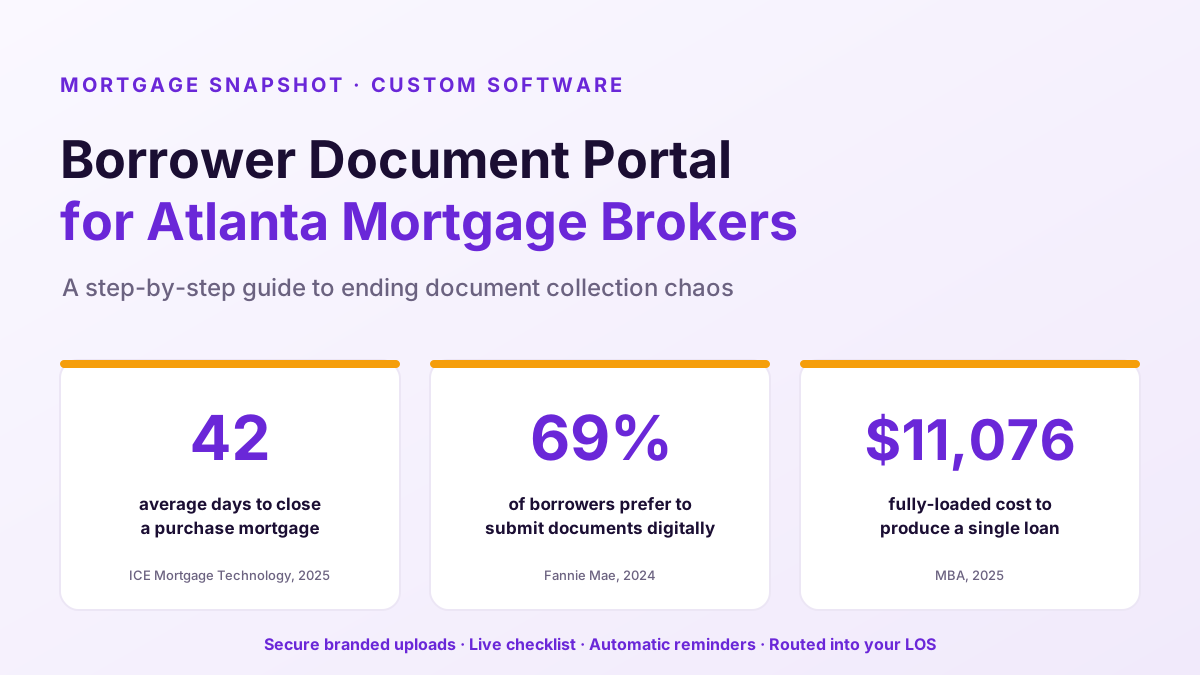
Rate, program, and underwriting turn-times get most of the attention, but the part of the timeline you control most directly is document collection. A purchase mortgage takes roughly 42 days to close on average (ICE Mortgage Technology, 2025), and a meaningful slice of that is spent simply waiting on borrower paperwork — the “conditions” and re-requests that pile up when documents arrive incomplete, illegible, or one page at a time.
Two things make this especially costly in Atlanta right now.
First, borrowers expect a digital experience — and quietly punish you when you don’t deliver one. Fannie Mae’s research on recent homebuyers found 69% prefer to submit financial documents using digital tools, 63% want to use a mobile app, and 57% want an eClosing portal (Fannie Mae, 2024). Yet Fannie Mae also found many recent buyers were never offered digital verification options. That gap is your opportunity: in a metro where buyers are comparison-shopping lenders on their phones, the broker with the cleaner upload experience feels more trustworthy before a single document is reviewed. J.D. Power’s origination research reinforces the point — digital channels are one of the six factors that drive borrower satisfaction, and satisfaction climbs sharply when lenders engage early and make the process easy (J.D. Power, 2024).
Second, every file you lose to friction is expensive to replace. Independent mortgage banks spent $11,076 in total production expense per loan in 2024, down slightly from $11,258 in 2023 (Mortgage Bankers Association, 2025) — the fully-loaded cost of commissions, compensation, tech, and overhead to originate a single loan. When acquiring a borrower costs that much, letting one stall out over document hassle in Atlanta’s ~$387,000 market (Zillow, 2026) is one of the most avoidable losses on your P&L.
The takeaway isn’t “buy more leads.” It’s to stop leaking the borrowers you already earned. A document portal is the single highest-leverage fix, because it attacks the most manual, most repetitive, and most borrower-visible part of your process at once. This pairs directly with faster speed-to-lead follow-up and disciplined pre-qualification follow-up: capture fast, qualify cleanly, then collect documents without the drag.
How to set up a borrower document portal (7 steps)
Here’s the build, in the order you should tackle it. Each step works whether you assemble it inside a CRM or commission a custom software build — the logic is the same.
Step 1 — Map your document checklist by loan type
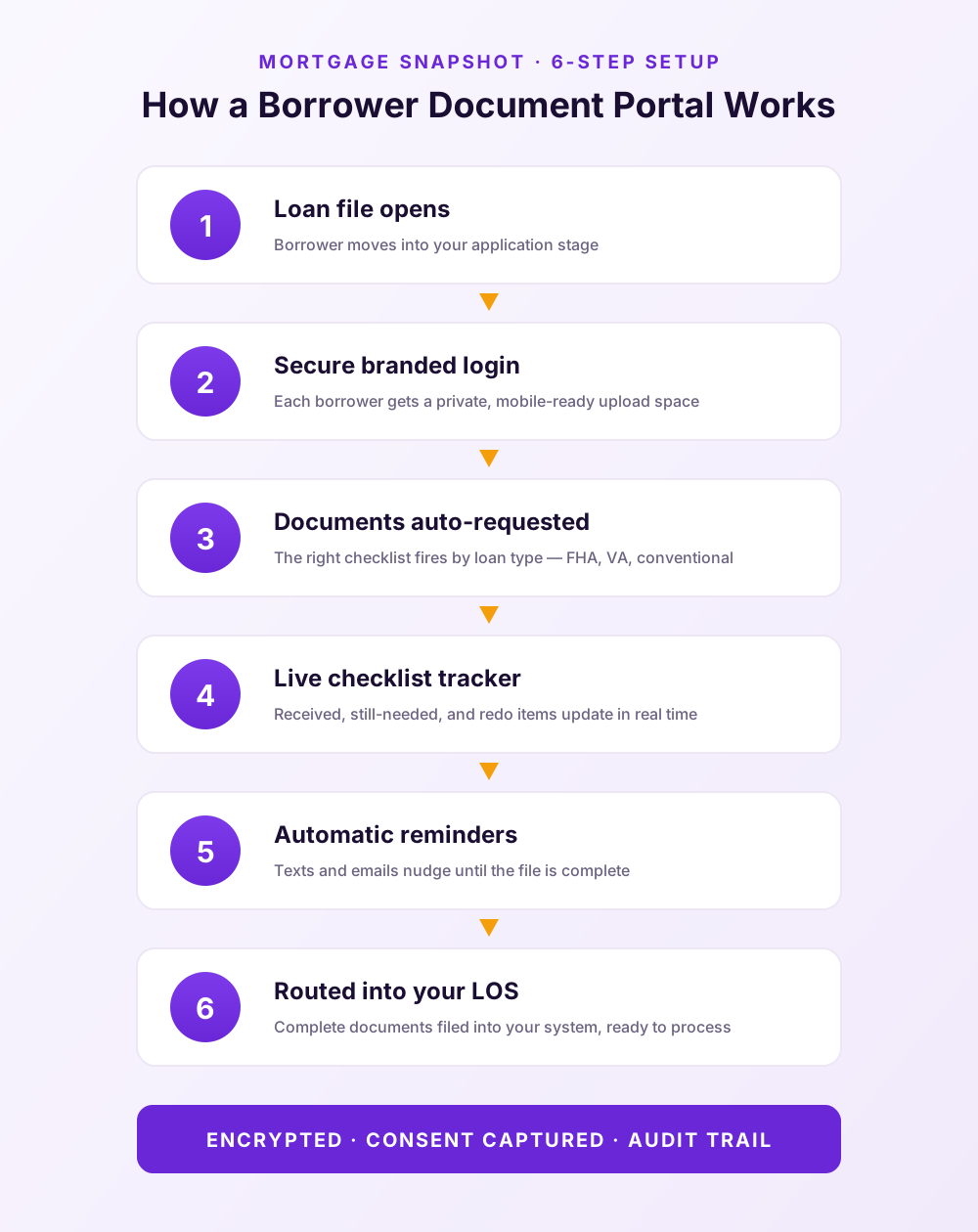
Before any software, write down exactly what a complete file looks like for each program you originate. An FHA file, a VA file (with the COE), a conventional file, and a jumbo file each require a different set. Build a master checklist with conditional items — self-employed borrowers add profit-and-loss and business returns; gift funds trigger a gift letter and donor statement; VA adds the Certificate of Eligibility. This checklist is the backbone of the portal: it’s what the borrower sees, what reminders reference, and what “done” means. Get it right on paper first.
Step 2 — Give every borrower a secure, branded login
Each borrower needs their own private, password-protected space — not a shared link, not an email thread. It should carry your Atlanta firm’s name, logo, and colors, so the experience feels like an extension of your brand, not a third-party tool. Two rules matter here: it must work flawlessly on a phone (63% of borrowers want a mobile app, per Fannie Mae, 2024), and access must be scoped so a borrower only ever sees their own file. This is also where a prebuilt mortgage website and portal can share one branded front door.
Step 3 — Auto-request the right documents the moment a file opens
The instant a borrower moves into your “application” or “processing” stage, the portal should fire the correct checklist for their loan type — no LO deciding what to send, no copy-pasting a list. Tie the trigger to a stage change in your CRM so it happens automatically. This is the difference between a portal and a folder: the system initiates the request, in seconds, with the exact items that file needs and nothing it doesn’t.
Step 4 — Add a live checklist and status tracker
The borrower should always see three things at a glance: what’s received (green check), what’s still needed, and what — if anything — was kicked back for a redo. On your side, the same tracker shows every file’s completeness in one view, so a processor can see at a glance which Atlanta files are 90% there and which just started. This visibility is what kills the “wait, did they ever send the bank statement?” phone calls. It’s also the borrower-facing transparency that J.D. Power ties to higher satisfaction (J.D. Power, 2024).
Step 5 — Automate reminders so you stop chasing
This is where most of your reclaimed hours come from. Instead of you remembering to nudge each borrower, the portal sends its own escalating reminders — a friendly text and email at 24 hours, another at 72 hours, a gentle “your rate lock timeline” note as closing approaches — until every item is in. Reminders reference the live checklist, so they always name exactly what’s still missing. Keep the cadence consistent with your consent and TCPA practices; if you’re automating SMS, follow the same guardrails covered in our mortgage text-message compliance guide.
Step 6 — Route completed documents into your LOS or CRM
A document sitting in a portal isn’t done — it’s done when it’s filed where your processing and underwriting actually happen. The portal should push each uploaded item to the right place in your loan origination system or CRM, named and categorized, so no one is downloading-and-re-uploading by hand. This integration step is the one most DIY setups skip, and it’s where a real custom software build earns its keep: connecting the borrower-facing portal to the back-office system so the whole thing is one pipeline, not two disconnected tools. If your stack runs on GoHighLevel, this ties into your CRM and workflow automations directly.
Step 7 — Lock down security, consent, and the audit trail
You’re collecting Social Security numbers, bank statements, and pay stubs — this is sensitive financial data, and it must be handled like it. At minimum: encryption in transit and at rest, scoped access so only the right people see a file, explicit consent capture at intake, and a complete audit trail that logs who uploaded what and when. That audit trail isn’t just good hygiene — it’s your record if a borrower or examiner ever asks how a document was handled. Build compliance in from the first step, not bolted on at the end; it’s far cheaper than retrofitting it, and it’s the part a specialized build gets right by default.
Build vs buy: portal options for Atlanta brokers
There are three realistic ways to get a borrower document portal. The right one depends on how custom your process is and how much you want to own.
| Factor | Generic upload tool | CRM-built portal | Custom software |
|---|---|---|---|
| Branded to your firm | Rarely — their logo | Partly | Fully — your brand |
| Loan-type checklists | Manual | Basic, with setup | Conditional, automatic |
| LOS / CRM routing | No — you re-file | Inside that CRM only | Any system, end-to-end |
| Audit trail & controls | Limited | Depends on plan | Built to your rules |
| You own it | No — you rent | No — tied to the CRM | Yes — full IP transfer |
For a solo LO who just needs uploads to stop living in email, a CRM-built portal — assembled inside a platform like GoHighLevel alongside your pipeline and reminders — is often the fastest, lowest-cost start. If your process is genuinely your own, you want it fully branded, you need it wired into a specific LOS, or you’re an Atlanta brokerage standardizing the same experience across a team, custom software is the path: you own the code, it fits your exact workflow, and it connects the borrower portal to your back office as one system. Many firms start with the CRM version and graduate to a custom build as volume grows — and if you’d rather not run any of it yourself, a dedicated GHL VA can operate the whole document pipeline day to day.
What it costs — and the payoff
A CRM-assembled portal can ride on the software you may already run — GoHighLevel plans start around $97–$497/month — plus setup time. A custom software build is a project: our fixed-price engagements run $3K–$50K+ depending on scope, or $75/hour for iterative work, with full IP transfer and a 30-day bug-fix warranty included (see custom software pricing). Because we build with modern AI-assisted development, timelines are typically about half what a traditional dev shop quotes — a document-processing build is often a matter of a few weeks, not a few months.
Now weigh that against the loss it prevents. At $11,076 to produce one loan (MBA, 2025) and an average Atlanta home value near $387,000 (Zillow, 2026), recovering even a handful of files a year that would otherwise stall — plus the hours your team stops spending on document chase — pays back the build quickly. The real return is compounding: every file after the first flows through the same clean pipeline, and every Atlanta borrower gets the modern experience that, per the data, increasingly decides who they trust with the loan.
Frequently asked questions
Borrower document portals for Atlanta mortgage brokers — quick answers
What is a borrower document portal?
It's a secure, branded online space where each mortgage borrower logs in to see exactly which documents you need, upload them from a phone or laptop against a live checklist, and track what's still outstanding — while the system automatically requests documents, sends reminders, and files everything into your LOS or CRM. It replaces collecting documents over email and text. Our custom software team builds these for mortgage firms.
How does a document portal speed up closing?
The average purchase mortgage takes about 42 days to close (ICE Mortgage Technology, 2025), and document back-and-forth is one of the most controllable delays. A portal auto-requests the right items the moment a file opens, sends escalating reminders until everything is in, and routes complete documents into processing — so a file reaches 'documents complete' in hours instead of the days lost to email tag.
Is it secure to collect borrower financial documents online?
It is when the portal is built for it: encryption in transit and at rest, scoped access so only the right people see a file, explicit consent capture, and a full audit trail logging who uploaded what and when. Security and compliance should be designed in from the first step, not added later — which is exactly what a purpose-built custom software portal does by default.
Should Atlanta brokers build a custom portal or use their CRM?
For a solo loan officer who just needs uploads out of email, a portal assembled inside a CRM like GoHighLevel is often the fastest, lowest-cost start. Choose custom software when you want it fully branded, need it wired into a specific LOS, have a workflow that's genuinely your own, or you're standardizing one experience across a team. Many firms start on the CRM version and graduate to a custom build as volume grows.
What does a custom borrower document portal cost?
Fixed-price custom software projects run $3K–$50K+ depending on scope, or $75/hour for iterative work — with full IP transfer and a 30-day bug-fix warranty included (see pricing). A CRM-assembled portal can ride on software you may already run (GoHighLevel plans start around $97–$497/month) plus setup. Weigh either against the $11,076 it costs to produce one loan (MBA, 2025).
Do borrowers actually want to upload documents digitally?
Yes — strongly. Fannie Mae found 69% of borrowers prefer to submit financial documents using digital tools, 63% want a mobile app, and 57% want an eClosing portal, yet many recent homebuyers reported never being offered one (Fannie Mae, 2024). In a competitive market like Atlanta, the broker with the cleaner digital experience wins trust before a document is even reviewed.
About the author
Terrence Ndiaye is a Compliance & Operations Advisor for the mortgage niche, based in Columbus, OH. He writes about the operational guardrails that let originators move fast without skipping the steps that matter — consent and TCPA handling, audit trails, secure document workflows, and the systems that keep AI messaging and borrower data on the right side of the rules. Terrence is a fictional editorial persona for Mortgage Snapshot; nothing here is individualized financial, legal, or compliance advice. We are not a lender, and any figures cited are from the sources linked.
Related reading
- Mortgage CRM for loan officers: the 2026 buyer’s guide — the system a document portal plugs into.
- Mortgage speed-to-lead: why the first 5 minutes decide the deal — capture fast, then collect documents without the drag.
- Pre-qualification follow-up that moves borrowers forward — the step right before document collection.
- Missed-call text-back for loan officers — the instant response that stops leads going cold.
- GoHighLevel VA for loan officers in Phoenix — hand the whole pipeline to a mortgage-niche expert.